 blog
Is Painting Brick Worth It for Home Value? A 2026 Guide
Last Updated: October 22, 2026
Quick Summary
Painting brick is worth it for home value only when the brick is in poor condition, the neighborhood already leans painted, and you plan to stay or sell within a few years. In most other cases, natural brick holds broader buyer appeal and lower long-term risk.
- Painted brick can devalue a home when the brick is in good condition and buyers expect natural masonry.
- Paint over damp masonry seals water in, causing permanent spalling damage.
- Paint alone rarely adds more value than it costs, so treat it as a marketing expense.
- Limewash costs $3 to $5 per square foot and is more reversible than paint.
- A professional soft-wash runs $300 to $600 and can remove decades of grime.
Table of Contents
- Is Painting Brick Worth It for Home Value? The Short Answer
- Does Painting Brick Devalue a Home?
- Painted Brick House Pros and Cons
- Moisture, Breathability, and Permanent Damage Risks
- Cost to Paint a Brick House and Return on Investment
- How to Maintain Painted Brick
- Alternatives to Painting Brick and a Pre-Sale Decision Framework
- Frequently Asked Questions
Is Painting Brick Worth It for Home Value? The Short Answer
Painting brick is worth it for home value only when the brick is in poor condition, the neighborhood already leans painted, and you plan to stay or sell within a few years. In most other cases, natural brick holds broader buyer appeal and lower long-term risk.
That's the honest answer, and it's not the one most painting companies will give you. At Dunwoody Painters, we've spent over 15 years working on exteriors around Metro Atlanta, and we've seen both outcomes: sellers who gained real curb appeal and sellers who spent money on a finish that scared buyers off.
Here's what the Appraisal Institute's guidance on exterior improvements makes clear: exterior appearance shapes buyer perception before anyone walks through the door. But perception cuts both ways.
Below, we break down when painted brick helps resale value, when it hurts, what it costs, and how to decide before you commit.
Does Painting Brick Devalue a Home?
Painting brick can devalue a home when the brick is in good condition and buyers in your area expect natural masonry. It rarely destroys value outright, but it narrows your buyer pool.
That narrowing is the real risk. A brick house with healthy, unpainted brick appeals to buyers who specifically want brick. Paint removes that selling point and replaces it with a finish some buyers view as high-maintenance.
When Painted Brick Helps Resale Appeal
Painted brick helps when the brick is already damaged, mismatched, or dated. Think faded red-orange brick from the 1970s, patchy mortar repairs, or a color that clashes with the rest of the street.
It also helps when the surrounding neighborhood has already gone painted. Buyers judge a house against its neighbors, and a painted exterior that fits the block reads as intentional rather than odd.
A modern look is another factor. Some buyers want a clean white or greige brick house, and paint delivers that for far less than replacement.
When It Hurts: Buyer Preferences and Neighborhood Style
Buyer preferences vary by region, and that matters more than any national trend. In established neighborhoods where natural brick is the norm, a painted house can stand out in the wrong way.
Neighborhood style is the strongest signal. If most homes on your street show natural brick, painting yours makes it the outlier. Some buyers love that. Many don't.
There's also the permanence problem. Paint on brick is hard to reverse, and buyers know it. That single fact makes some of them walk away.
Painted Brick House Pros and Cons
The pros of a painted brick house are real: fast curb appeal, a modern look, and coverage for stained or mismatched brick. The cons are equally real: trapped moisture risk, higher upkeep, and a narrower buyer pool at resale.
Here's the balanced view.
Pros:
- Instant curb appeal and a modern look
- Hides stained, faded, or mismatched brickwork
- Cheaper than re-bricking or siding over
- Lets you match the neighborhood style
Cons:
- Can trap moisture and cause permanent damage
- Needs repainting every several years
- Hard to reverse once applied
- Some buyers see painted brick as a red flag
Moisture, Breathability, and Permanent Damage Risks
Brick breathes. It absorbs moisture and releases it through its surface, and paint can block that process. When water gets trapped behind a painted exterior, it finds nowhere to go.
The consequences are not cosmetic. Trapped moisture leads to spalling, cracked mortar, and in serious cases, structural damage. Masonry experts consistently warn that sealing brick with the wrong coating does more harm than leaving it alone.
The fix is a breathable masonry paint designed for brick. Standard exterior paint is not the same product, and using it is a common and expensive mistake.
Cost to Paint a Brick House and Return on Investment
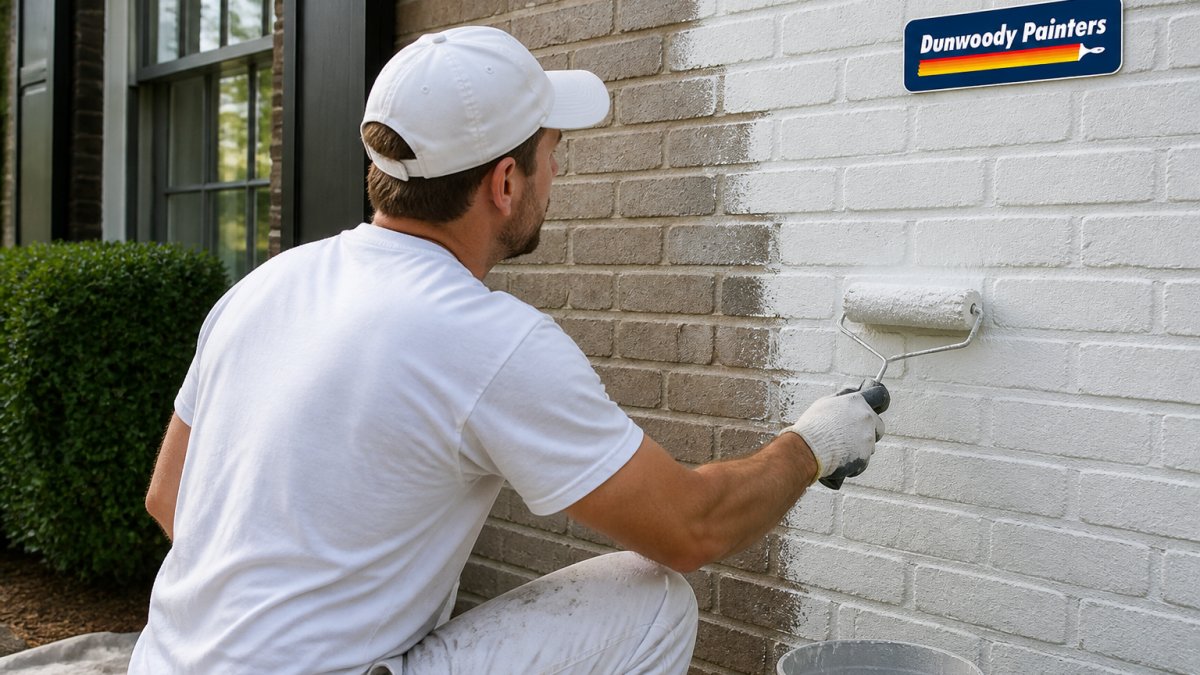
The cost to paint a brick house depends on brick texture, prep work, access, and coating type. DIY painting can cut the labor cost but often leads to premature failure on textured brick because proper prep, cleaning, patching, and priming, is where most of the durability comes from.
Return on investment is where homeowners get unrealistic. Paint improves curb appeal, and curb appeal helps a home sell. But paint alone rarely adds more value than it costs. The honest math: treat painting brick as a marketing expense for your home sale, not an investment that pays you back dollar for dollar.
Here's a transparent scenario to show how the numbers can work. If the paint helps the house sell one month faster and avoids a price cut, that could be a net positive. But if the neighborhood favors natural brick and the paint narrows your buyer pool, you may face longer days on market and a price negotiation that erases the gain. The outcome depends on local buyer preferences, not on paint itself.
Before you commit, ask a local real estate agent for recent comparable sales of painted versus unpainted brick homes in your price range. That local evidence beats any national average.
| Situation | Paint It? | Why |
|---|---|---|
| Brick is damaged or mismatched | Yes | Paint hides problems cheaply |
| Neighborhood is mostly painted | Yes | Fits the local style |
| Brick is healthy and neighbors are natural | No | Narrows your buyer pool |
| Active moisture or efflorescence | Not yet | Fix the water source first |
| Selling within a year in a natural-brick area | No | Risk outweighs reward |
How to Maintain Painted Brick
Maintaining painted brick takes more effort than natural brick, and homeowners should plan for it. Expect to wash the exterior annually and repaint every several years, depending on sun exposure and paint quality.
Upkeep looks like this:
- Rinse or soft-wash the exterior once a year
- Touch up chips and peeling spots quickly
- Check caulk and joints around windows and trim
- Repaint before the coating fails, not after
Skip the upkeep and the finish fails unevenly. That looks worse than natural brick ever would, and it costs more to fix.
Alternatives to Painting Brick and a Pre-Sale Decision Framework
Alternatives exist, and they deserve a look before you pick up a brush. Each option differs in cost, appearance, reversibility, and maintenance, and the right choice depends on your brick's condition and your sale timeline.
Limewash gives a soft, breathable finish that ages naturally and is more reversible than paint because it bonds mechanically rather than forming a film. Expect $3 to $5 per square foot professionally applied. It requires reapplication every 5 to 7 years but tolerates moisture well.
Brick staining soaks into the surface instead of sitting on top of it, so it never peels. Cost runs $4 to $7 per square foot. It's permanent like paint but avoids film failure and moisture trapping because it doesn't block breathability.
Repointing fixes mortar without touching the brick face. If your issue is crumbling mortar rather than ugly brick, repointing at $3 to $6 per square foot preserves the natural look and often solves the curb-appeal problem.
Cleaning is the cheapest option. A professional soft-wash runs $300 to $600 and can remove decades of grime, mildew, and efflorescence. Many homeowners paint because they think the brick is beyond cleaning, often it isn't.
Leaving brick natural costs nothing and preserves the broadest buyer pool in neighborhoods where natural brick is the norm. If the brick is healthy and the street is uniformly natural, this is often the highest-value choice.
Here's the framework we'd use before selling:
- Check brick condition. Damaged or mismatched brick favors paint; sound brick favors cleaning or leaving natural.
- Scan the street. Mostly painted neighbors favor paint; mostly natural neighbors favor restraint.
- Test for moisture. Any dampness means fix the water source before any coating.
- Compare comparable sales. Ask a local agent for recent sales of painted versus unpainted brick homes in your price range.
- Weigh time on market. If your area moves slowly, curb appeal matters more, but only if the finish matches buyer expectations.
- Consider reversibility. If you might sell within five years, favor limewash, stain, or cleaning over permanent paint.
Frequently Asked Questions
Does painting over brick devalue a home?
It can, but not automatically. Painting brick is largely permanent because masonry paint seals the surface, and some buyers pay less for a brick house that has lost its natural look. In neighborhoods where exposed brick is the norm, a painted exterior can narrow your buyer pool. In areas where painted brick is common, it often reads as an upgrade. Local comparable sales, not national opinion, decide which way it goes.
What is the downside to painting brick?
The main risk is trapped moisture. Brick needs to breathe, and a coating that seals the surface can hold water inside the wall, which leads to spalling, cracked faces, and damage that is expensive to fix. Painting is also close to permanent, so reversing it means stripping or replacing brickwork. Add repainting every several years and the upkeep never really stops.
How much does it cost to paint a brick house?
Pricing depends on square footage, stories, brick condition, and prep work, so there is no single figure that fits every home. A 2,000-square-foot brick house costs more than a smaller ranch because of surface area, masking, and labor. Get a detailed, line-by-line estimate that separates prep, masonry paint, and labor so you can compare bids fairly.
How long does paint last on exterior brick?
A properly prepped and applied masonry coating typically holds up for several years before it needs refreshing, though sun exposure, moisture, and brick condition all shorten that window. Maintenance matters: cleaning, checking for chalking or peeling, and touching up early keeps the finish looking sharp and protects the brick underneath.