 listicle
Durable Exterior Paint Finishes 2026: Top Options Compared
Table of Contents
- What Makes Durable Exterior Paint Finishes Stand Out
- Satin vs. Flat Exterior Paint: Which Performs Better
- Weather-Resistant Exterior Paint: Protection Against the Elements
- Long-Lasting Exterior Paint: Durability Testing and Real-World Performance
- Best Exterior Paint for Trim, Siding, and Other Surfaces
- Top Exterior Paint Finishes and Sheen Levels for 2026
- Finish Selection by Material and Climate Conditions
- Maintenance, Repainting, and Longevity: What to Expect
- Frequently Asked Questions
Last Updated: October 9, 2026
What Makes Durable Exterior Paint Finishes Stand Out
Durable exterior paint finishes are engineered to withstand harsh weather, UV rays, moisture, and temperature swings without peeling, cracking, or fading. At Dunwoody Painters, we've spent over 15 years helping homeowners understand which finishes perform best in real-world conditions.
The difference between a finish that lasts five years and one that lasts ten comes down to three factors: the paint formulation, the sheen level, and how well it resists your home's specific stressors. A satin finish on trim handles daily contact and moisture better than flat paint, and semi-gloss on doors sheds water instead of absorbing it. The right exterior paint finishes 2026 options match your climate, material, and maintenance tolerance.
Weather resistance matters most. Paint that can't expand and contract with wood movement will crack, paint that traps moisture will peel, and paint on poorly prepared surfaces won't adhere no matter how premium the formula. This guide breaks down which durable exterior paint finishes deliver, how to match finishes to surfaces, and what maintenance keeps them fresh.
Satin vs. Flat Exterior Paint: Which Performs Better
Flat exterior paint absorbs moisture and shows dirt easily, making it the wrong choice for most exterior applications. Satin finish, by contrast, reflects light slightly and sheds water far better than flat, which is why it's become the standard for exterior walls and siding.
Flat paint looks premium and hides imperfections, but it's porous: water sits on the surface, works into micro-cracks, and causes peeling and mildew. Satin's light sheen lets water bead and run off, and it's easier to clean because dirt doesn't embed the way it does with flat paint.
For trim, doors, and shutters, the advantage swings even harder toward satin. These surfaces get more direct sun and weather contact, and flat paint on a front door will look chalky and worn within two years.
The tradeoff is minimal: satin costs slightly more per gallon and shows brush marks if applied poorly. But for durable exterior paint finishes, satin is the baseline. Flat belongs on interior walls only.
| Paint Sheen | Water Resistance | Dirt Visibility | Durability | Best For |
|---|---|---|---|---|
| Flat | Poor | High | 3-5 years | Interior only |
| Satin | Excellent | Low | 7-10 years | Siding, trim, doors |
| Semi-Gloss | Excellent | Very Low | 10+ years | High-traffic trim, doors |
Weather-Resistant Exterior Paint: Protection Against the Elements
Weather resistance is the core function of any durable exterior paint finish, which must handle moisture infiltration, UV degradation, temperature cycling, and coastal salt spray.
Latex-based exterior paints dominate because they breathe better than oil-based formulas, letting trapped moisture escape rather than sealing it behind an impermeable shell. That flexibility prevents cracking as wood expands and contracts, and modern latex formulations add mildew inhibitors and UV stabilizers older paints lacked.
The best weather-resistant finishes include a full wall coating system, not just paint.
For standard paint, look for formulations that explicitly state crack resistance and moisture protection. Matching the tier to your climate and budget matters more than chasing the most expensive option.
Long-Lasting Exterior Paint: Durability Testing and Real-World Performance
Long-lasting exterior paint comes down to how well the finish adheres to the substrate and resists environmental stress. Laboratory testing measures this through accelerated weathering, but real-world performance tells a different story.
Paint longevity varies by climate. In humid regions with high UV exposure, even premium finishes may fade or chalk after seven to eight years, while in drier climates the same paint can last twelve years or more. Homes with large seasonal swings see more expansion and contraction, which stresses the paint film.
The best way to assess durability is warranty coverage and real customer experience.
What most guides miss is surface preparation. A premium paint over poorly prepped substrate fails faster than mid-tier paint applied correctly, so power washing, sanding, priming, and filling gaps matter more than the brand. At Dunwoody Painters, we invest heavily in prep because it determines whether a finish lasts five years or ten.
Best Exterior Paint for Trim, Siding, and Other Surfaces
Different surfaces demand different finishes. Choosing right prevents premature failure and preserves curb appeal.
Trim and Doors
Trim and doors take the most abuse, exposed to direct sun, rain splash, and daily contact. Semi-gloss or high-gloss finishes are non-negotiable here: the higher sheen reflects water instead of absorbing it, and the harder finish resists scuffing and dirt better than satin.
Semi-gloss is the practical choice for most trim, offering excellent water shedding and durability without looking overly glossy. High-gloss suits doors and accent trim where you want maximum protection and a formal look, though it shows every dust particle and needs more frequent cleaning.
Siding and Main Walls
Siding and main walls are the bulk of your exterior, and satin is the standard. It balances water resistance, dirt hiding, and aesthetics, with a slight sheen that's barely noticeable from a distance but provides meaningful protection.
On wood siding, satin lets the grain show through while protecting it; on fiber cement or vinyl, it looks natural rather than plastic or overly shiny. Flat might hide significant imperfections better, but you'll sacrifice durability. Stick with satin and address surface prep instead.
Shutters and Exterior Furniture
Shutters and exterior furniture are decorative but exposed. Satin works for most applications, but if your shutters are high-traffic or in all-day sun, semi-gloss offers better fade resistance and easier cleaning.
For painted wicker or metal furniture, semi-gloss is safer: it handles moisture better, resists rust staining on light-colored finishes, and complements decorative pieces better than flat or satin.
Top Exterior Paint Finishes and Sheen Levels for 2026
Sheen levels range from flat to high-gloss. Knowing what each offers helps you match finish to surface and maintenance expectations.
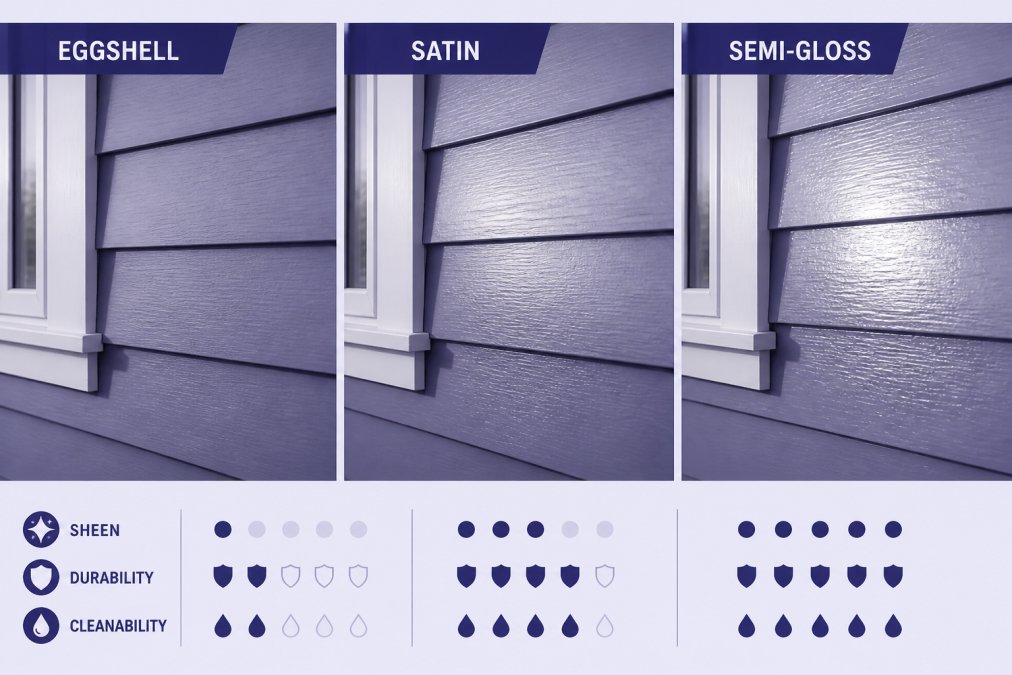
Eggshell Finish
Eggshell sits between flat and satin with a subtle, eggshell-like sheen. It's more washable than flat but less glossy than satin, making it a compromise for exterior use that works in specific situations but isn't ideal as a primary choice.
Eggshell works best on secondary surfaces like garage doors or side walls with limited weather exposure, hiding imperfections better than satin while still shedding some water. It's less durable than satin on high-traffic surfaces, so if you're choosing between the two, satin wins.
Satin Finish
Satin is the workhorse of exterior painting. It offers the best balance of durability, appearance, and maintenance for most applications. The light sheen provides water resistance and dirt hiding without looking overly glossy. Satin works on siding, trim, doors, and fascia.
Most homeowners and professional painters default to satin because it performs reliably across surfaces and climates, making it the safest choice if you're unsure what to specify. The durable exterior paint finishes 2026 market is dominated by satin for good reason.
Semi-Gloss and High-Gloss Finishes
Semi-gloss offers noticeably more sheen than satin and superior water resistance, ideal for trim, doors, shutters, and any surface with direct weather exposure. It's also easier to clean, which matters where dirt or salt spray accumulates.
High-gloss is the most durable, water-resistant finish available, used on doors, accent trim, and decorative elements where you want maximum protection and a polished look. The tradeoff is appearance: it can look plastic on large wall areas, so reserve it for focal points and high-traffic surfaces.
Finish Selection by Material and Climate Conditions
The best finish depends on your siding material and where you live. A finish that works in Arizona might fail in the Pacific Northwest.
Wood siding demands satin or semi-gloss. Wood expands and contracts significantly with moisture and temperature, so a rigid finish will crack; satin provides flexibility while protecting the grain, and semi-gloss works for trim and doors where you want maximum protection.
Fiber cement siding is more stable than wood and less prone to moisture absorption, so it handles satin or semi-gloss equally well and lower-sheen finishes are acceptable. Many homeowners choose satin on fiber cement for a natural appearance.
Vinyl siding is the most forgiving, absorbing little moisture and expanding less than wood. Satin works well and maintains the vinyl's appearance; avoid high-gloss, since the contrast between sheen and siding can look artificial.
Climate matters enormously. In humid, high-rainfall regions, semi-gloss or high-gloss sheds water faster and resists mildew better; in dry climates, satin is sufficient. Coastal salt spray demands the most durable finishes, semi-gloss or high-gloss with mildew inhibitors and UV stabilizers.
Temperature cycling stresses paint more than steady heat or cold. If your region has large seasonal swings, choose finishes with proven flexibility; latex-based paints handle this better than oil-based formulas because they let the substrate breathe.
Maintenance, Repainting, and Longevity: What to Expect
A durable exterior paint finish requires maintenance to reach its full lifespan. Understanding what to expect helps you plan for repainting and keep your home looking fresh.
Most exterior paint finishes last seven to ten years before significant weathering.
Maintenance extends finish life. Annual inspection for peeling, chalking, or mildew catches problems early, and cleaning siding every two years removes dirt and mold that degrade the finish.
Repainting intervals depend on maintenance and climate. Significant fading or chalking after seven years means repainting is due; if the finish holds well, you can stretch to year nine or ten.
According to the American Coatings Association, proper surface preparation before repainting is the single most important factor in finish longevity. Pressure washing, scraping loose paint, and priming bare wood add cost upfront but prevent premature failure.
When you repaint, surface preparation matters more than choosing a different brand.
At Dunwoody Painters, we approach exterior painting as a long-term investment. Our detailed estimates include surface prep costs because that's where durability begins, and our 2-year workmanship warranty covers adhesion and application quality.
Choosing durable exterior paint finishes 2026 requires matching sheen to surface type, understanding your climate's stressors, and committing to proper surface preparation.
We recommend starting with a detailed estimate that breaks down surface prep, primer, and finish costs separately. If you're in the Atlanta area and ready to refresh your exterior with a finish that lasts, the EPA's guidance on exterior paint durability and the Painting and Decorating Contractors of America standards inform our approach to every project.
Frequently Asked Questions
What type of exterior paint finish is best for durability?
Satin and semi-gloss finishes offer superior durability for exterior surfaces. Satin provides excellent weather resistance and moisture protection while maintaining a subtle sheen, making it ideal for siding and walls. Semi-gloss finishes deliver even greater protection and are best for trim, doors, and areas exposed to moisture. Both resist dirt, mildew, and fading better than flat finishes, which are softer and more prone to staining.
How long should durable exterior paint last before repainting?
Quality exterior paint typically lasts 5-10 years depending on climate, surface preparation, and finish type. Premium long-lasting exterior paint formulas can extend to 10-15 years in favorable conditions. Harsh weather, direct sun exposure, and poor surface preparation shorten longevity. Regular maintenance, cleaning and spot repairs, helps extend the finish's service life. Climate-specific recommendations matter: humid regions may need repainting sooner than drier areas.
What is the difference between satin vs. flat exterior paint?
Satin exterior paint has a low-sheen finish that resists moisture, dirt, and mildew better than flat paint. It's more durable and easier to clean, making it ideal for most exterior walls and siding. Flat paint offers no sheen, hides imperfections well, but absorbs moisture and stains more readily, reducing durability. For exterior use, satin outperforms flat in weather resistance and longevity, though flat may work for protected surfaces in dry climates.
Which exterior paint brands offer the longest-lasting finishes?
For guaranteed durability and professional application, working with experienced painters who use quality materials and proper surface preparation ensures your finish lasts as long as the paint's warranty.