 how-to
Do Atlanta Painters Wait Until the Job Is Done to Get Paid?
Last Updated: November 2, 2026
Quick Summary
Yes, it is common for Atlanta painting contractors to ask for little or no money up front and collect the balance after the work is done. A clear painting contractor payment schedule in writing matters most, and the right arrangement depends on the size of the job and what the contract says.
- A modest deposit reserves materials and your start date, while larger jobs may be paid in stages.
- A deposit should match real up-front costs, not the whole job, and never be demanded before a contract is signed.
- Confirm insurance, references, and the change-order process in writing before paying any deposit.
- Many contracts tie final payment to final completion, not substantial completion, so read that clause closely.
- Do not release the final payment until walkthrough defects are fixed and documented in writing.
Table of Contents
- Is It Normal for Atlanta Painters to Wait for Full Payment Until Completion?
- Common Payment Structures: Deposits, Progress Payments, and Final Payment
- How Much Deposit Is Reasonable for a Painting Contractor?
- Substantial Completion Versus Final Completion: When Payment Is Due
- Final Payment for a Painting Job: The Walkthrough and Punch List
- Painting Job Completion Checklist Before You Pay
- Booking Your Next Painting Project With Clear Payment Terms
- Frequently Asked Questions
Is It Normal for Atlanta Painters to Wait for Full Payment Until Completion?
Yes, it is common for professional painting contractors in Atlanta to ask for little or no money up front and collect the balance after the work is done, so a clear painting contractor payment schedule in writing matters. Practices vary, and the right arrangement depends on the size of the job and what the contract says.
A few things are typical:
- A modest deposit to reserve materials and your start date
- Payment in stages on larger jobs
- The final balance due after you approve the finished work
Consumer guidance from the Georgia Governor's Office of Consumer Protection is a useful starting point for understanding your rights as a homeowner.
Common Payment Structures: Deposits, Progress Payments, and Final Payment
Most painting contracts use one of three payment structures, and each one shifts risk differently between you and the painting contractor payment terms you agree to.
Deposit only. You pay a small amount before work begins, and the rest is due at completion. This is the most common arrangement for residential interior and exterior work.
Progress payments. You pay in milestones, such as after surface prep or after the first coat. This suits longer projects like whole-house exteriors.
Final payment only. You pay nothing until the job is finished and approved. This protects you most, but it still requires a clear written agreement.
Pros and cons at a glance:
- Deposit only: low upfront cost, but you carry the risk until the end
- Progress payments: spreads cost out, but requires tracking each milestone
- Final payment only: strongest protection, but you need a trustworthy contractor and a written contract
The three common payment structures shift risk differently between homeowner and contractor.
| Structure | Best for | Key difference |
|---|---|---|
| Deposit only | Residential interior and exterior work | Small upfront cost, balance due at completion |
| Progress payments | Longer projects like whole-house exteriors | Payments tied to milestones such as first coat |
| Final payment only | Homeowners seeking maximum protection | Nothing paid until job is finished and approved |
How Much Deposit Is Reasonable for a Painting Contractor?
A deposit should cover real up-front costs, materials, equipment rental, and reserving your start date, not the whole job. The written contract is your main safeguard, and the deposit should be sized to real up-front costs rather than the whole job.
What a reasonable deposit should cover:
- Paint, primer, caulk, and sundries specific to your job
- Equipment rental or specialty tools for the surface type
- Scheduling and crew allocation for your start date
What it should not do:
- Exceed the contractor's actual up-front costs by a wide margin
- Replace a written scope, schedule, or payment schedule
- Arrive as a demand for cash before any contract is signed
Verify the Contractor Before You Pay a Deposit
Before releasing any deposit, confirm the basics in writing (How To Avoid a Home Improvement Scam). A short checklist:
- Written contract and scope. The estimate should list surfaces, rooms, prep work, paint products, and the number of coats.
- Insurance. Ask for a certificate of general liability insurance and, where applicable, workers' compensation coverage.
- References. Request two or three recent local references for projects similar in size and surface type.
- Change-order process. Confirm in writing how added work is priced and approved before it is performed.
- Lien documentation. Ask whether the contractor will provide lien waivers or releases as payments are made, especially on larger projects.
- Payment method. Prefer traceable methods, check or card, over cash, and get a receipt for every payment.
A deposit is normal; an oversized deposit with no written scope is not. Match the deposit to real up-front costs, verify insurance and references first, and keep every payment traceable.
Substantial Completion Versus Final Completion: When Payment Is Due
These two terms are easy to confuse, and the difference matters.
- Substantial completion means the work is done enough to use, though small items may remain.
- Final completion means every item in the contract is finished, including touch-ups.
Many contracts tie the final payment to final completion, not substantial completion. To see how standard payment timing works, read no payment until completion: is it standard?. Read this clause closely before you sign. If your contract is unclear, ask for it to be defined in writing.
Final Payment for a Painting Job: The Walkthrough and Punch List
The final walkthrough is your chance to inspect the work before you pay. Walk every room with the painter and check:
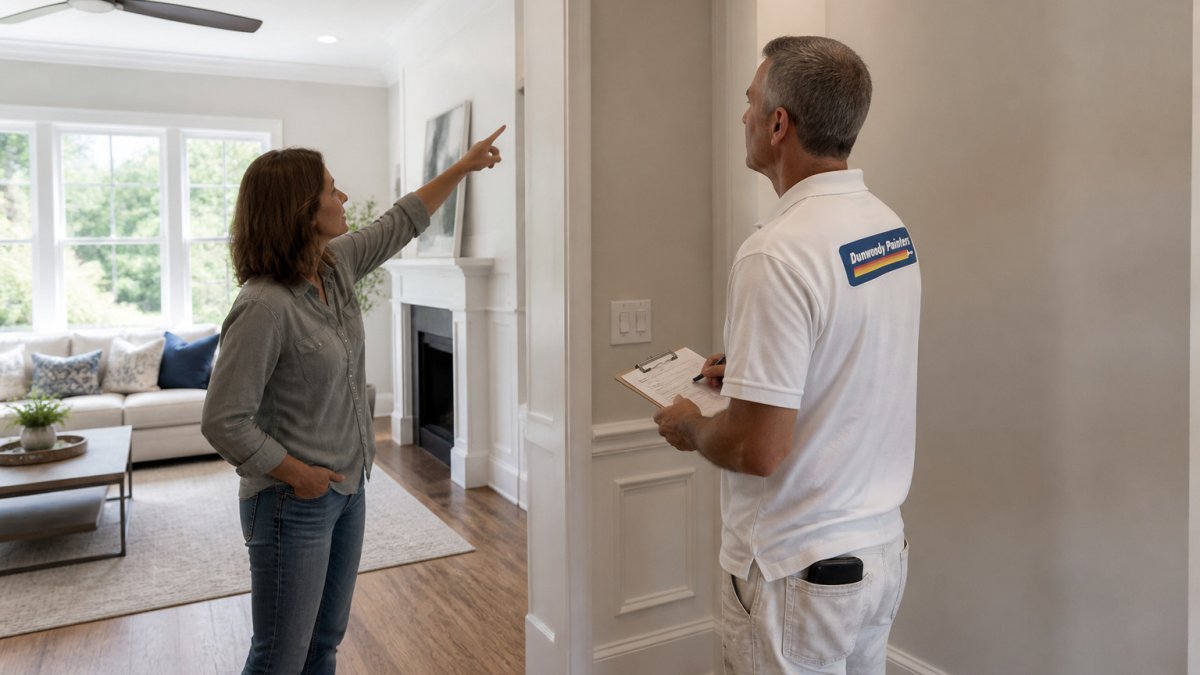
- Even coverage with no roller marks or lap lines
- Clean cut edges at ceilings, trim, and corners
- No drips on floors, fixtures, or hardware
- Furniture and floors returned to their original spots and undamaged
Create a punch list of anything that needs correction. A good contractor will note each item and schedule the touch-ups promptly.
!Homeowner and painter walking through a freshly painted living room, inspecting trim and wall edges
What to Do If the Walkthrough Reveals Defects
Do not sign off on the final payment until the defects are fixed. Put each issue in writing, and set a reasonable deadline for correction. If the contractor will not return to address the problems, document the defects with photos and dates. Georgia homeowners with unresolved disputes can contact the Georgia Attorney General's Consumer Protection Division for guidance.
Residential and commercial painting contracts often differ. Commercial jobs may include retainage, which holds back a percentage of payment until the project closes out, along with more formal acceptance terms.
Painting Job Completion Checklist Before You Pay
Use this checklist before releasing the final payment:
- The written contract scope matches the finished work
- All rooms and surfaces listed in the estimate are painted
- Touch-ups and punch-list items are complete
- Floors, furniture, and fixtures are clean and undamaged
- Final invoice matches the agreed contract price
- Warranty terms are provided in writing
Keep copies of the contract, invoices, and photos for your records.
Booking Your Next Painting Project With Clear Payment Terms
Clear terms protect both you and your painter. Dunwoody Painters provides detailed, line-by-line estimates, background-checked in-house crews, and a written 2-year workmanship warranty. To see the full range of services we offer, visit our painting services page. If you are planning a ceiling job, review our ceiling painting without lap marks or stains page for warranty and free estimate details.
Ready to start? Schedule a free estimate with Dunwoody Painters.
Frequently Asked Questions
What should a painting contract say about payment terms?
A written painting contract should list the total contract price, the deposit amount and due date, any progress or milestone payments tied to specific work stages, the final payment amount, and the deadline for paying after the final walkthrough. It should also state how change orders are priced and approved. Clear terms reduce disputes because both sides know exactly when money is due and what triggers each payment. Ask for these details in writing before any work starts, and keep a signed copy for your records.
Can you withhold final payment if painting work is incomplete?
Yes, you can generally withhold the final payment for work that is not finished or does not meet the contract terms, as long as you communicate the reason in writing. Document the specific incomplete items, such as missed touch-ups or defective areas, and give the contractor a reasonable opportunity to correct them. Paying the undisputed balance while holding back a specific amount for unresolved items is a common approach. Review your contract for any dispute or notice provisions before withholding payment.
How long should you wait to pay a contractor after the work is finished?
Payment timing depends on the contract, but a common practice is to pay the final balance within a few days of a satisfactory final walkthrough, or within a set number of days after the invoice. Your agreement should state the exact deadline. If you have a legitimate concern about the work, raise it promptly and in writing rather than simply delaying payment. Consider speaking with a local attorney if a payment dispute escalates.