
 ultimate-guide
Exterior Painting Cost Factors 2026: What Drives Your Quote
Table of Contents
- How Exterior Painting Cost Factors Shape Your 2026 Quote
- The 2026 Pricing Landscape: Tariffs, Labor, and Demand
- Average Cost to Paint Exterior of House Per Square Foot
- Factors Affecting House Painting Quotes: Labor, Materials, and Prep
- Exterior Painting Timeline for a Two Story House
- DIY vs. Professional Exterior Painting: Real Cost Comparison
- Hidden Costs: Permitting, HOA Compliance, and VOC Regulations
- Energy Efficiency, Paint Longevity, and Maintenance Schedules
- Frequently Asked Questions
Last Updated: September 13, 2026
How Exterior Painting Cost Factors Shape Your 2026 Quote
Exterior painting cost factors in 2026 come down to six moving parts: square footage, surface condition, prep work, material grade, labor rates, and timing. Get them wrong and you'll overpay or repaint in three years.
Most homeowners ask "what's the price per square foot?" when the real question is "what's included in that number?" A bid that skips power washing, caulking, and primer isn't cheaper, it's deferred work you'll pay for later.
This guide from Dunwoody Painters breaks down what pushes a quote up or down, where DIY actually saves money, and the hidden costs most contractors don't mention.
The 2026 Pricing Landscape: Tariffs, Labor, and Demand
Three forces shape exterior painting costs this year: tariffs on coatings and resins, a tight labor market for skilled painters, and seasonal demand that spikes from spring through early fall.
How Tariffs Move the Material Line
Architectural coatings depend on a global supply chain for titanium dioxide, acrylic resins, and specialty additives. When tariffs raise the landed cost of those inputs, manufacturers pass the increase downstream within one to two ordering cycles.
Material pricing quoted in January may not hold in June. Ask how long the material quote is locked and whether the estimate includes a contingency for mid-project price changes; a reputable company honors the quoted price for a set window or discloses the adjustment mechanism up front.
Labor Is the Bigger Variable
Labor typically makes up the largest share of a professional exterior painting bill and is the most market-sensitive line item. Skilled painters command higher rates than five years ago, and the gap between a legitimate company and a fly-by-night crew shows up in what that rate covers.
A properly priced labor line includes:
- Crew wages at market rate for experienced painters
- General liability insurance and workers' compensation coverage
- Payroll taxes and required withholdings
- Equipment, vehicles, and fuel
- Supervision and project management time
- Job site protection and cleanup
The cheapest quote usually cuts corners on coverage, crew quality, or both. If a bid comes in dramatically below the others, ask which items are missing, the answer tells you what you're buying.
Demand Timing Is the Lever You Control
Seasonal demand follows a predictable curve. Calls spike in late spring and stay high through early fall, when weather windows are widest. Crews book out weeks in advance and contractors have little incentive to discount.
Late winter and early spring are the opposite: demand is soft, crews have open slots, and many companies price aggressively to fill the calendar. If your project can wait, off-season scheduling is one of the few cost levers you control.
Peak-season and off-season pricing on the same scope commonly differ meaningfully. The gap varies by market, but the direction is consistent: book early or book late, not in the middle of the rush.
What This Means for Your Budget
Treat the 2026 landscape as three manageable risks: lock material pricing for a defined window, verify the labor line reflects real coverage and crew quality, and schedule against the demand curve.
Average Cost to Paint Exterior of House Per Square Foot
The average cost to paint the exterior of a house per square foot is not a single number. It's a range that swings widely based on prep needs, stories, siding material, and trim complexity. Any contractor quoting one flat per-foot rate before seeing your home is guessing.
Square footage isn't the primary driver. A 2,000-square-foot ranch with clean vinyl siding and minimal trim can cost less to paint than a 1,600-square-foot two-story with peeling wood, failing caulk joints, and extensive trim work.
Why Square Footage Alone Misleads You
Square footage tells you how much surface exists, not what it needs. Paintable area, not floor area, is what gets measured, and the two diverge fast on homes with porches, dormers, shutters, and architectural details.
A good estimator measures trim linear footage separately from wall area, because trim is slower to paint and often needs sanding and caulking first. Stucco, wood, fiber cement, and vinyl each hold paint differently, driving different labor estimates.
Factors Affecting House Painting Quotes: Labor, Materials, and Prep
Factors affecting house painting quotes fall into three buckets: labor, materials, and surface preparation. Labor is usually the largest line item, materials the most negotiable, and prep where quotes diverge most.
Labor vs. Material Cost Breakdown
Labor typically accounts for the majority of a professional exterior painting bill: crew time, masking, setup, and cleanup, plus overhead like insurance, equipment, and project management.
Materials are the smaller share, but quality swings widely. Premium 100% acrylic latex holds up far better against sun and humidity than budget coatings, and oil-based paint still has a place on bare wood and metal where blocking stains matters. Label coverage and mil thickness specs tell you how many gallons a job needs.
| Cost Component | Typical Share of Total | What Drives It |
|---|---|---|
| Labor | Largest share | Stories, access, trim detail, crew experience |
| Materials | Smaller share | Paint grade, primer, caulking, sundries |
| Surface prep | Highly variable | Repairs, scraping, sanding, power washing |
| Overhead and markup | Fixed percentage | Insurance, equipment, project management |
Surface Preparation and Repair Costs
Prep is where a cheap bid becomes an expensive job. Power washing, scraping loose paint, sanding rough edges, caulking gaps, and priming bare spots aren't optional, skip them and the new coating fails from underneath.
Wood rot and stucco repair push costs higher still, because those are carpentry and patching jobs before they're painting jobs. A paint-only quote on a home with soft fascia boards sets you up for a callback you'll pay for.
Exterior Painting Timeline for a Two Story House
A typical exterior painting timeline for a two story house runs three to six working days for the painting itself, plus prep time that can add several more days depending on repairs. Weather is the wild card.
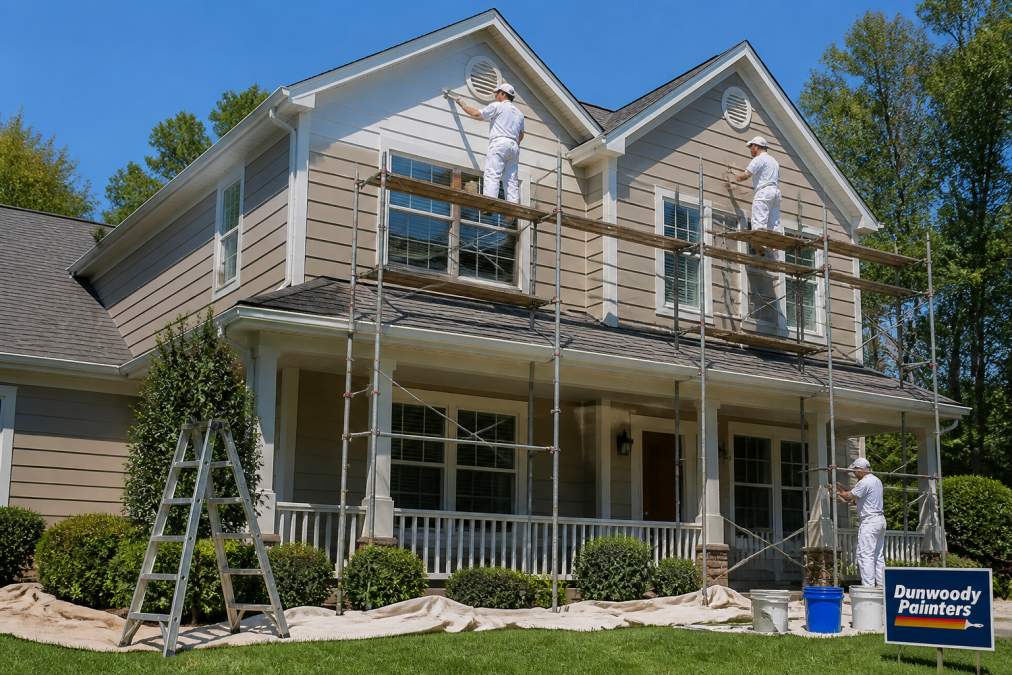
Access drives the timeline more than size. Two-story walls need ladders, scaffolding, or lifts, and setup eats hours before a brush touches siding. Add trim, fascia, and shutters and you're at the longer end of the range.
Weather Delays and Seasonal Pricing
Weather controls the schedule in ways no contractor can override. Paint needs proper temperature and dry time to cure, so rain, high humidity, or extreme heat can pause work mid-project.
Seasonal pricing follows the same logic: spring and summer are peak demand, so crews book out and prices firm up. Late fall and winter offer more flexibility, though cold-weather products and shorter daylight limit what's feasible.
DIY vs. Professional Exterior Painting: Real Cost Comparison
DIY exterior painting saves on labor but costs you time, equipment, and risk. The honest comparison is not "materials vs. full quote" but "materials plus your weekends plus the cost of fixing mistakes" against a professional job with warranty coverage. Run the numbers honestly and the answer is rarely obvious.
The Real DIY Cost Stack
Most homeowners budget for paint and a few brushes. The full list is longer:
- Paint and primer at retail pricing, which is higher per gallon than contractor pricing
- Caulk, patching compound, sandpaper, and masking materials
- Brushes, rollers, extension poles, and trays
- Ladders or scaffolding rental for anything above one story
- A sprayer if you choose that route, plus the learning curve and overspray risk
- Pressure washer rental or purchase for surface prep
- Drop cloths, tape, and protective coverings
- Disposal fees for leftover paint and solvents
- Your own time, valued at whatever your weekends are worth to you
Add those up and the gap between DIY and professional narrows fast, especially on a two-story home where ladder and lift rental alone can eat a meaningful chunk of the savings.
The Break-Even Logic
The DIY math works in a narrow band. A single-story ranch with simple siding, good surface condition, and easy access is a reasonable DIY candidate if you have the time, tools, and comfort working at height. The moment your project involves any of the following, the break-even tips toward professional:
- Two or more stories, or steep roof lines
- Wood rot, stucco cracks, or failing caulk joints that need repair before painting
- Extensive trim, fascia, soffit, or shutter detail
- Lead-based paint on a pre-1978 home, which triggers federal renovation rules (the EPA)
- An HOA with color and finish requirements you must satisfy
Each adds specialized skill, equipment, or legal exposure a homeowner isn't set up to absorb.
The Cost of a Failed DIY Job
This is the number most DIY comparisons leave out. A paint job that fails early, from poor prep, wrong product, or application error, costs you the full repaint, plus labor to strip or correct the failed coating, plus damage to the substrate underneath.
A common pattern is a DIY job that looks fine for one or two seasons, then shows peeling, blistering, or mildew because the surface wasn't properly cleaned, sanded, or primed. By the time the problem is visible, the fix costs more than the original professional quote.
| Factor | DIY | Professional Contractor |
|---|---|---|
| Upfront cost | Materials, equipment, rentals, and your time | Full labor and materials quote |
| Time investment | Multiple weekends, weather-dependent | Three to six working days typical |
| Surface prep quality | Limited by your tools and experience | Full power washing, scraping, caulking, priming |
| Safety risk | High on two-story and steep roofs | Crews trained and insured for height work |
| Finish durability | Varies widely with technique | Consistent mil thickness and coverage |
| Warranty | None | Written workmanship warranty |
| Cost of early failure | Full repaint plus substrate repair, at your expense | Covered by workmanship warranty |
The 10-Year Cost of Ownership View
Zoom out and the comparison changes shape. A professional job with proper prep and premium materials holds its finish far longer than a rushed DIY job with budget paint. Over ten years, the professional route often needs one repaint; the DIY route may need two or three, each with its own material and time cost.
Factor in the value of your weekends, the risk of a failed job, and the warranty protection you give up, and the professional quote frequently wins on total cost of ownership even when it loses on day-one price.
Hidden Costs: Permitting, HOA Compliance, and VOC Regulations
Three costs catch homeowners off guard: permits, HOA requirements, and environmental regulations on paint products. Individually small, together they can add meaningful cost and delay.
Some jurisdictions require permits for exterior work, particularly when repairs involve structural elements. Your HOA may dictate approved color palettes, finish sheens, and even application methods. Violating those rules means repainting at your own expense.
VOC regulations matter too. Federal and state rules limit volatile organic compound content in architectural coatings, and low-VOC and zero-VOC products are now standard for most exterior applications (the EPA). Check the EPA information on volatile organic compounds for how these limits apply to coatings, and confirm with your contractor which products meet current standards in your area.
Before signing anything, verify your HOA's architectural review process and ask your contractor whether permits are required for your scope of work.
Energy Efficiency, Paint Longevity, and Maintenance Schedules
Energy efficiency and longevity are the two angles most pricing guides ignore, and they're where a slightly higher upfront cost pays you back.
Reflective and insulating exterior coatings can reduce heat absorption on sun-exposed walls, easing the load on your cooling system during peak summer. The effect varies by climate and wall assembly, but on west- and south-facing walls in hot markets, the difference is measurable.
Longevity depends on prep quality and product grade more than anything else. A properly prepped surface with premium acrylic latex holds its finish far longer than a rushed job with budget paint. Plan on a maintenance schedule that includes:
- Annual inspection of caulk joints and trim for cracking
- Touch-up of peeling or blistering spots as they appear
- Power washing every one to two years to remove mildew and chalk
- Full repaint when fading or adhesion failure becomes widespread
Warranty coverage ties directly into this. A written workmanship warranty protects you if the finish fails early due to application error, which is why Dunwoody Painters backs every exterior job with a written 2-year workmanship warranty and detailed, line-by-line estimates.
Exterior painting rewards homeowners who plan ahead and ask hard questions before signing. The cheapest bid usually isn't the best value once prep, materials, and warranty coverage enter the picture. Dunwoody Painters has spent over 15 years helping metro homeowners get durable, stress-free results, with background-checked in-house crews, premium materials, a no-payment-until-complete policy, and a written 2-year workmanship warranty. Get started with Dunwoody Painters and get a detailed, line-by-line estimate you can actually compare.
Frequently Asked Questions
How much should it cost to paint a 2000 square foot house exterior?
Exterior painting cost for a 2,000 square foot home depends on siding type, prep work, and local labor rates. The range reflects real differences in surface condition, number of stories, and trim linear footage. A home needing extensive scraping, caulking, and wood rot repair will land at the higher end of the spectrum. Request a line-by-line estimate so you can see exactly what drives your number, not just a lump sum.
What are the primary factors that influence exterior painting quotes?
The biggest factors affecting house painting quotes are square footage of paintable surface, siding material, prep work required (power washing, scraping, sanding, caulking), number of stories, trim and fascia linear footage, paint quality, and regional labor rates. Accessibility, architectural details, and whether repairs like stucco patching or wood rot treatment are needed also move the number. A detailed estimate should itemize each of these so you can compare bids fairly.
Does the type of siding affect the total cost of an exterior paint job?
Yes. Siding type changes both material and labor costs. Smooth surfaces like vinyl or fiber cement take paint efficiently, while stucco and rough wood absorb more product and require specialized prep. Wood siding often needs scraping, sanding, and primer application to bare spots, adding labor hours. Brick and masonry typically need breathable acrylic latex or elastomeric coatings. Always confirm the estimate specifies the coating system matched to your siding.
How long does it take to paint the exterior of a two story house?
A typical two-story house takes 3 to 6 working days for a professional crew, assuming dry weather and moderate prep. Power washing and repairs add a day before painting starts. Primer application and two finish coats usually take 2 to 3 days depending on dry time between coats. Rain, high humidity, or unexpected wood rot can extend the exterior painting timeline for a two story house by several days. Ask your contractor for a written schedule with weather contingency.
What should be included in a professional exterior painting estimate?
A thorough estimate lists square footage, siding material, prep steps (power washing, scraping, sanding, caulking), primer and paint brands with product lines, number of coats, trim and fascia linear footage, labor, material markup, and any repair allowances for wood rot or stucco. It should also state warranty coverage, payment schedule, and job site cleanup terms. If a bid is a single number with no breakdown, ask for an itemized version before signing.
How do labor and material costs break down for exterior painting projects?
Labor typically represents 60 to 75 percent of an exterior painting project, covering crew wages, overhead expenses, insurance, and job site management. Materials, including primer, paint, caulk, and sundries, make up the remaining 25 to 40 percent. Higher-end acrylic latex or oil-based paint raises the material share. Prep-heavy jobs shift the ratio toward labor because scraping, sanding, and repairs are time-intensive. Ask for the split so you understand where your money goes.
Why have professional exterior painting costs shifted in 2026?
Several forces pushed exterior painting cost factors upward heading into 2026. Tariffs on imported coatings and raw materials raised paint prices. Skilled painter wages increased as demand for qualified crews outpaced supply. Insurance and overhead expenses also climbed. At the same time, homeowners are investing in curb appeal and home valuation, keeping demand steady. The net effect: quotes reflect higher material and labor line items than two years ago, even for similar scope.