
 ultimate-guide
How Long Do Painted Kitchen Cabinets Last?
Table of Contents
- How Long Do Painted Kitchen Cabinets Last?
- Factors Affecting Paint Longevity on Kitchen Cabinets
- Best Paint for Kitchen Cabinets Durability
- Cabinet Painting Preparation Steps for Lasting Results
- Signs of Wear: When Painted Cabinets Need Attention
- Maintenance Tips to Extend Cabinet Paint Life
- Professional Painting vs. DIY: What Lasts Longer
- Frequently Asked Questions
Last Updated: September 20, 2026
How Long Do Painted Kitchen Cabinets Last?
Painted kitchen cabinets can last anywhere from 3 to 10 years or longer, depending on paint quality, preparation, maintenance, and kitchen conditions. The real difference between cabinets that hold up beautifully and those that chip and peel within a few years comes down to three factors: what you paint with, how you prepare the surface, and how well you maintain the finish afterward.
We've seen homeowners spend thousands replacing cabinets when a professional repaint would have extended their life by a decade. The problem isn't usually the paint itself, it's the application. Most DIY attempts skip critical preparation steps or use consumer-grade materials that simply aren't engineered for the moisture, heat, and daily contact that kitchen cabinets endure.
This guide walks you through what determines how long painted kitchen cabinets actually last, how to prepare them correctly, and what to watch for once the paint is dry.
Factors Affecting Paint Longevity on Kitchen Cabinets
The lifespan of painted kitchen cabinets depends on a combination of material choices and environmental conditions. Understanding these factors helps you make decisions that extend durability rather than cut corners.
Paint Quality and Type
The paint you choose is the foundation of longevity. Cabinet-specific paints, particularly alkyd enamels and polyurethane-based formulations, outperform standard latex paints because they cure harder and resist moisture better. Alkyd enamels, which are oil-based, create a topcoat that bonds tightly to wood and resists chipping even under heavy use. Polyurethane finishes offer similar durability with faster drying times.
Consumer-grade latex paint, by contrast, remains slightly flexible after drying. This flexibility matters less on walls but becomes a problem on cabinet doors and drawer fronts, which move constantly. The flexing causes the paint film to crack, and moisture seeps in behind the finish. Within 2-3 years, chipping becomes visible.
Professional-grade paints also contain better pigments and binders, which means the finish maintains color and gloss longer. Budget paint fades faster and becomes dull, making cabinets look worn even if the paint hasn't failed structurally.
Surface Preparation and Primer Application
How you prepare the substrate determines whether paint adheres or peels. Cabinets arrive from the factory with a finish, either stain, lacquer, or a factory-applied coating. Painting over that finish without proper degreasing and sanding creates a weak bond. The paint sits on top rather than bonding to the wood.
Degreasing removes kitchen oils, grease, and residue that accumulate over years of cooking. A simple wipe with a damp cloth isn't enough. Professional degreasing uses chemical cleaners that break down the oils so primer and paint can grip the surface. Sanding (typically 120-150 grit) scuffs the existing finish just enough to create mechanical adhesion without removing the protective layer entirely.
Primer is where many DIY projects fail. A bonding primer, specifically formulated to grip glossy or difficult surfaces, is essential. Primer fills micro-voids in the substrate and creates a uniform base for topcoats. Skipping primer or using cheap primer means the topcoat has nothing to grip. Paint that doesn't adhere peels within months.
Kitchen Environment and Humidity
Kitchens are harsh environments for painted surfaces. Heat from cooking, steam from dishwashing, and humidity fluctuations cause wood to expand and contract. If the paint film isn't flexible enough to move with the substrate, it cracks. If moisture penetrates through cracks, it causes the paint to blister and peel from underneath.
High-humidity kitchens age painted cabinets faster. Coastal areas, basements, and homes with poor ventilation see accelerated wear. Conversely, kitchens with good ventilation and stable indoor humidity (30-50%) preserve paint finishes longer. Running an exhaust fan during cooking and shortly after significantly extends cabinet paint life.
Temperature swings also matter. Kitchens near exterior walls or windows experience wider temperature variations, which stresses the paint film. Kitchens in interior locations with stable temperatures hold paint longer.
Best Paint for Kitchen Cabinets Durability
The best paint for kitchen cabinets balances durability, ease of application, and finish quality. Alkyd enamels offer the hardest, most durable finish but require good ventilation and longer drying times. Polyurethane-based cabinet paints dry faster (typically 4-6 hours between coats) while maintaining excellent durability. Water-based polyurethane finishes have improved significantly and now rival oil-based options for hardness and adhesion.
Professional painters typically choose one of three:
- Alkyd enamel: Hardest finish, best for high-traffic cabinets, requires 16+ hours between coats and strong ventilation
- Polyurethane (oil-based): Excellent durability and gloss retention, moderate drying time, requires ventilation
- Water-based polyurethane: Fast drying, low odor, good durability, easier cleanup, slightly less gloss depth than oil-based
Consumer-grade latex paint should be avoided for cabinets. It lacks the hardness and moisture resistance of professional-grade formulations. Even premium latex paints flex too much for cabinet doors that open and close daily.
The finish you choose matters too. Gloss and semi-gloss finishes are more durable than matte or satin on cabinets because they're harder and shed moisture better. Matte finishes look modern but show wear faster and are harder to clean.
Cabinet Painting Preparation Steps for Lasting Results
Preparation determines whether painted kitchen cabinets last 3 years or 10 years. This is where most DIY projects fail and where professional painters earn their value.
Degreasing and Sanding the Substrate
Start by removing cabinet doors and drawer fronts. Label them so you can reinstall them in the correct locations. Clean every surface with a degreasing cleaner, TSP (trisodium phosphate) or a modern equivalent. Wipe down doors, frames, and drawer fronts thoroughly. This removes years of cooking residue that would prevent primer and paint from bonding.
After degreasing, sand all surfaces. Use 120-150 grit sandpaper for cabinets with existing finish. The goal is to scuff the surface enough for primer to grip, not to sand through the finish. Sand with the grain where possible. Pay extra attention to edges and corners where paint typically chips first.
Vacuum and tack-wipe all surfaces after sanding to remove dust. Any dust left behind creates bumps in the paint film and weakens adhesion.
Primer Selection and Application
Apply a bonding primer formulated for glossy or difficult surfaces. Standard primers don't grip well to factory finishes. A bonding primer has resins that chemically adhere to the substrate, creating a foundation the topcoat can lock onto.
Apply primer in thin, even coats. Thick primer is more likely to run and takes longer to cure. Most primers dry to the touch in 1-2 hours but need 4-8 hours before sanding and recoating. Check the label for your specific product.
Sand lightly between primer and first topcoat (220 grit) to remove any dust or imperfections. This creates a smooth surface for paint and improves adhesion of the topcoat.
| Preparation Step | Duration | Frequency |
|---|---|---|
| Degreasing cabinets | 2-3 hours | Once before painting |
| Sanding substrate | 3-4 hours | Before primer |
| Primer application | 1-2 hours | 1-2 coats |
| Light sanding between coats | 30 minutes | Between primer and paint |
| Topcoat application | 2-3 hours | 2-3 coats |
Signs of Wear: When Painted Cabinets Need Attention
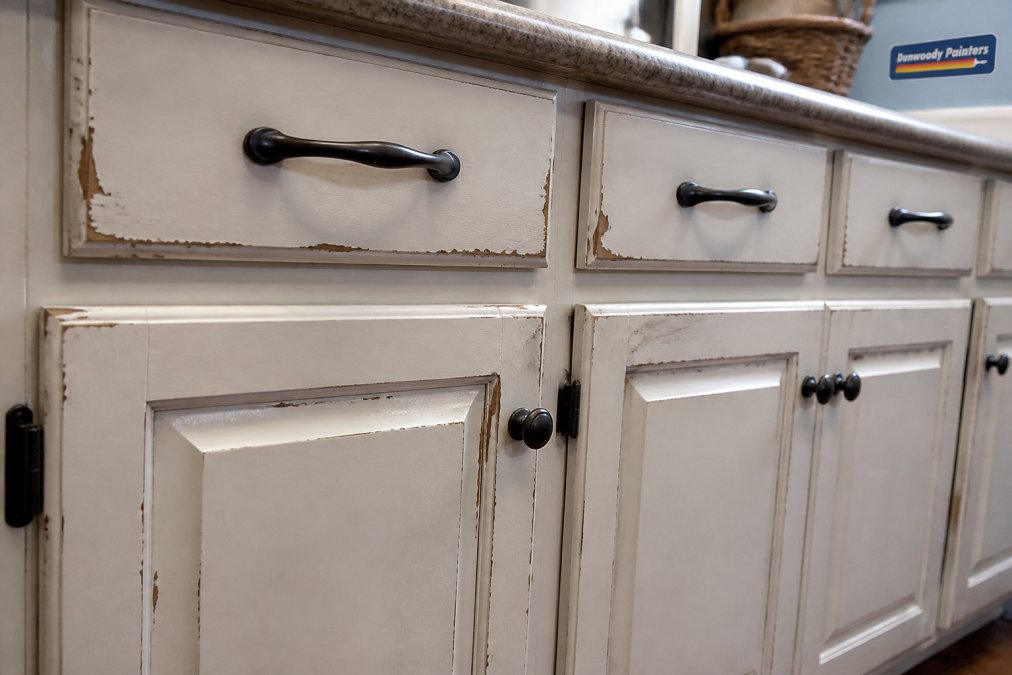
Knowing what to look for helps you catch problems early, when touch-ups are simple, before they become major repairs.
Maintenance Tips to Extend Cabinet Paint Life
Once your cabinets are painted, maintenance determines whether they hold up for 5 years or 10 years. Most of this is common sense, but consistency matters.
Professional Painting vs. DIY: What Lasts Longer
The honest answer: professional painting lasts significantly longer. Not because professionals use magic, but because they follow preparation steps that DIY projects typically skip.
Frequently Asked Questions
How many years do painted kitchen cabinets typically last?
With proper preparation, quality materials, and regular maintenance, painted kitchen cabinets typically last 3 to 10 years. Professional-grade paint and bonding primer can extend durability toward the upper range, especially in kitchens with moderate use. High-traffic kitchens or cabinets exposed to excessive moisture may see paint failure sooner. Homeowners who invest in thorough surface preparation and use alkyd enamel or polyurethane finishes generally experience longer-lasting results than those using basic latex paint.
What causes painted kitchen cabinets to chip or peel?
Chipping and peeling occur when paint loses adhesion to the substrate. Common causes include inadequate surface preparation (skipping degreasing or sanding), applying paint directly over glossy finishes without primer, moisture infiltration from humidity or water splashes, and poor-quality paint that lacks flexibility. Hardware stress from hinges and drawer slides also contributes to wear in high-traffic areas. Curing time matters too, paint applied in cold, humid conditions may not cure properly, reducing adhesion and durability.
How long do professionally painted cabinets last compared to DIY painting?
Professionally painted cabinets typically last 5-10 years, while DIY projects often fail within 2-5 years. The difference comes from professional preparation: experienced painters thoroughly degrease, sand, and prime before applying finish coats. They use professional-grade materials, apply proper topcoat thickness, and allow adequate curing time between coats. Professional painters also understand substrate bonding and environmental factors that affect curing. A written warranty, like Dunwoody Painters' 2-year workmanship guarantee, provides assurance that the job meets durability standards.
What's the best paint type for kitchen cabinet durability?
Alkyd enamel and polyurethane-based paints outperform standard latex for cabinet durability. Alkyd enamels offer excellent adhesion, moisture resistance, and a hard finish that resists chipping in high-traffic areas. Polyurethane finishes provide superior wear resistance and flexibility, reducing cracking over time. The substrate preparation and primer are equally important, a bonding primer designed for glossy surfaces ensures the topcoat adheres properly. Professional painters select paint based on kitchen conditions, humidity levels, and expected wear patterns to maximize longevity.